How many restrooms does a farm crew need?
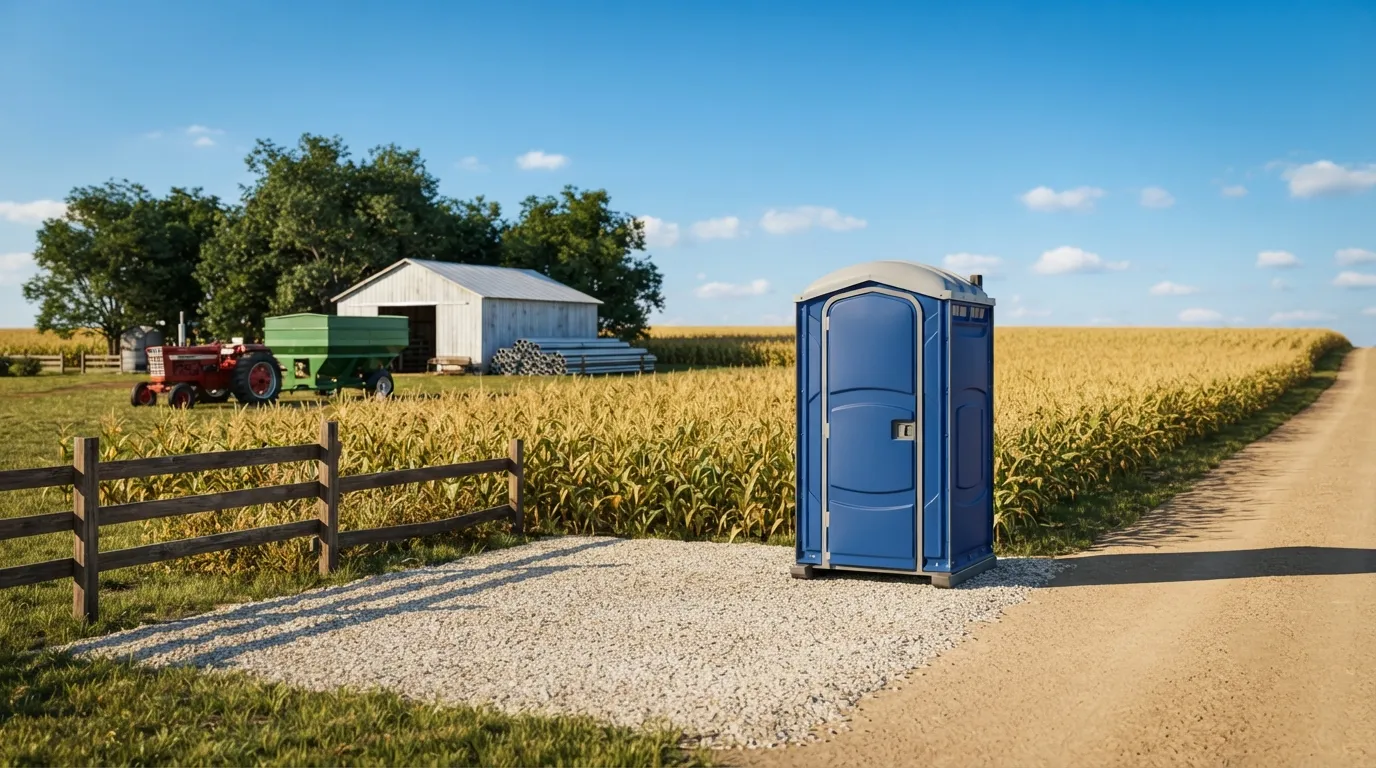
Federal field sanitation law, OSHA 1928.110, sets the baseline for hand-labor operations: one toilet and one handwashing facility per 20 employees, positioned within a quarter mile walk of where people are working. That is different from the general construction ratio under OSHA 1926.51(c), which allows one unit for every 20 workers up to a point, then scales to one seat and one urinal per 40 as crews grow past that. Most Pontiac-area farms fall well under 200 workers, so the math stays simple. If you run a packing shed with fixed crews and a rotating harvest crew out in the rows, you may need standard porta potty rental units at both locations rather than one central bank. We size this out for free before quoting, and the same logic drives our how many porta potties do i need guide. Water matters too: OSHA 1926.51(a)(1) requires an adequate supply of potable water at every worksite, which is why most farm accounts pair toilets with a handwashing station rental or a simple portable sink rental rather than relying on a jug. For crews spraying anything, that pairing stops being optional.
Do farms need handwashing stations separate from toilets?
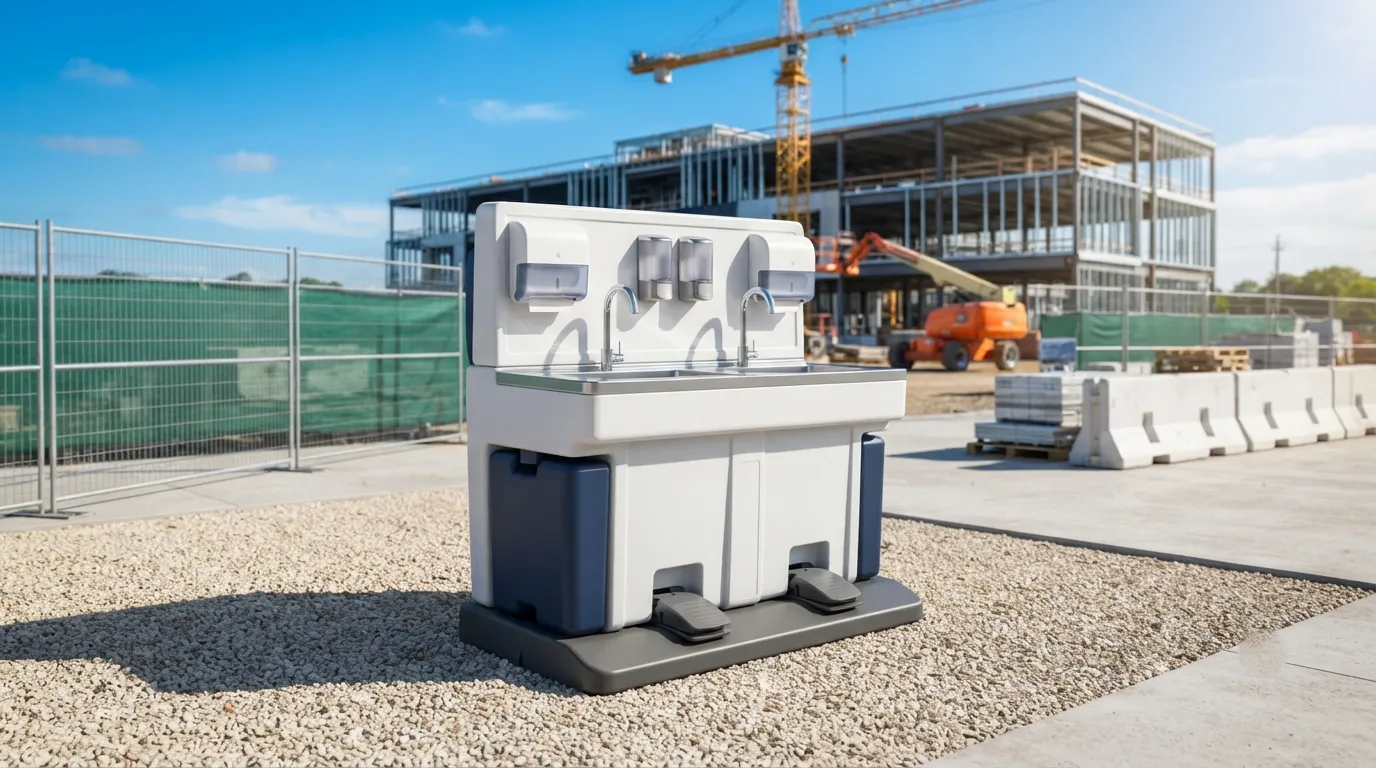
Yes, if anyone applies pesticides, herbicides or coatings. OSHA 1926.51(f)(1) requires washing facilities specifically where employees apply paints, coatings, herbicides or insecticides, or work around other harmful contaminants, and that duty sits apart from ordinary toilet counts. A crew running a sprayer rig through an orchard outside Pontiac needs a wash station at the field edge, not just back at the barn. We stock standalone hand sanitizer station rental units for light-contact work, but sanitizer gel does not satisfy the washing requirement once real chemical handling is involved; soap and water do the job under 29 CFR 1910.141(d)(2), which specifically requires soap and towels or a hand-drying device, not sanitizer alone. That rule was written for fixed workplaces, but we hold every mobile station to the same standard because it is the standard that actually protects your crew. Farms near Auburn Hills, 3.2 miles northeast of Pontiac, and Orion, 9.4 miles north, have used the same setup for spray season without issue. If you are unsure which standard applies to your operation, our portable restroom rental team will walk the fields with you before delivery day.
What restroom options work for remote fields?
Standard units are the workhorse: a 60 to 70 gallon holding tank, about 44 by 48 inches on the ground, roughly 92 inches tall, built to sit at a field edge for weeks without a service visit outpacing its capacity. For a bigger operation with a packing crew and a harvest crew both on payroll, a monthly porta potty rental often beats renting by the day, and our porta potty rental per day page breaks down when daily still makes sense. Some operations request a deluxe flushable porta potty for supervisors or office staff, and larger operations running a mobile crew all season sometimes add a restroom trailer rental instead. Access matters more on a farm than on a paved lot: gravel, mud ruts and irrigation ditches all change where a truck can actually reach, so we plan routes the way we would for a roll-off dumpster rental delivery, checking clearance before the day of service. Service intervals follow ANSI/PSAI Z4.3, which sets a baseline of one visit a week for up to 10 users across a standard 40 hour week; heavy harvest crews need tighter intervals, which we adjust on request.
| unit | day | week | month |
|---|---|---|---|
| standard | 100-350 | 130-500 | 125-325 |
| deluxe | 85-1200 | 150-290 | -- |
| ada | 200-400 | 120-240 | -- |
Bloomfield sits 6.3 miles south of Pontiac and Independence 11.9 miles northwest, so if your operation spans multiple parcels, we route one truck across all of them rather than billing separate delivery fees per stop.
How far in advance should I book for harvest season?
Book two to three weeks ahead if you can. Harvest timing shifts with weather, so we hold flexible delivery windows for farm accounts and will move a unit early if picking starts sooner than planned. Waiting until the week of harvest limits which units are available.
Can I get an ADA-accessible unit for farm workers?
Yes. ADA Standards section 213.2 requires at least 5 percent of clustered single-user units to be accessible, with a minimum of one. Farms with larger crews or public-facing operations like a pick-your-own stand should plan for at least one ADA unit from the start.
What happens if a field access road is too muddy for delivery?
Tell us before delivery day. We will check ground conditions and may recommend placement near a firmer access point, since standard units need stable footing and truck clearance to get set safely.
Do I need separate restrooms for a farm stand open to the public?
Yes, generally. Public customers are a different population than your labor crew, and mixing the two strains both. Most farm stands near Pontiac add one dedicated unit near parking, separate from field units.
How often do farm restrooms get serviced during peak season?
Weekly is the baseline under ANSI/PSAI Z4.3 for lighter use, but harvest crews pushing 10 or more users often need twice-weekly service. We set the schedule based on headcount, not the calendar.
Next step
Get a delivery date
Tell us the address, the dates and the headcount. We size the order and confirm the route.