How fast can you deliver during an emergency?
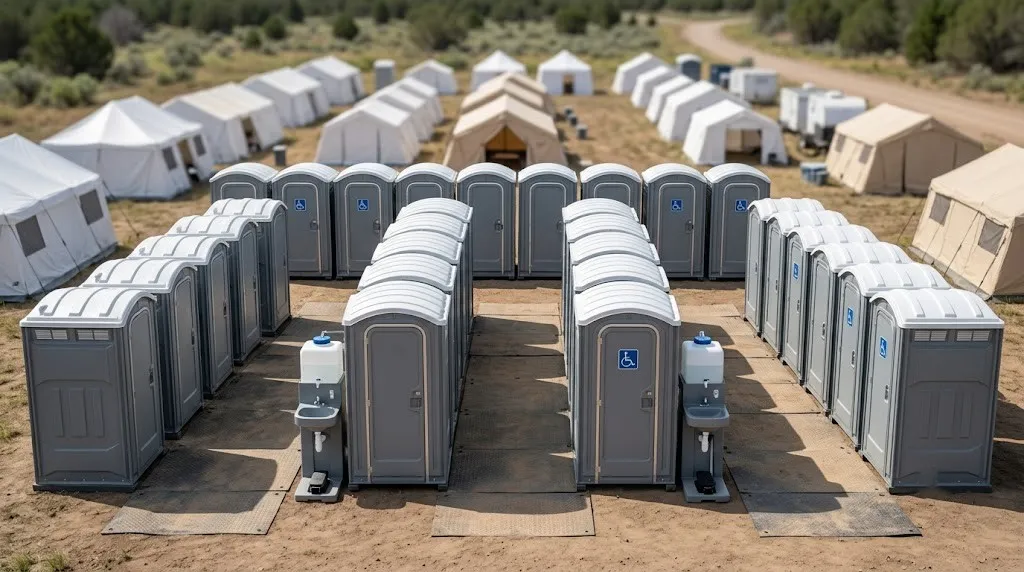
Speed is the whole point of emergency porta potty rental work, and we treat disaster calls differently than a normal weekend booking. Once a site address and a safe access point are confirmed, delivery trucks roll immediately, and most Pontiac deliveries land same day. We keep standard porta potty rental units, portable toilet rental stock, and handwashing station rental equipment ready to move without waiting on a full quote cycle, because disaster response cannot wait on paperwork. If a shelter, a church basement or a command post needs coverage in Pontiac itself, we prioritize it over routine work. Crews coming in from Auburn Hills, 3.2 miles northeast, or from Orion, 9.4 miles north, can be folded into the same delivery run without adding a full day to the schedule. For larger flood or storm response, we also bring in restroom trailer rental units when hundreds of displaced residents or responders need something closer to a real bathroom than a single stall. A 4 stall restroom trailer or an 8 stall restroom trailer can carry a shelter site for days without falling behind on service. Every delivery still meets OSHA 1926.51(a)(1), which requires an adequate supply of potable water at any place of employment, so responders working the site are covered from hour one.
What do you provide for disaster and shelter sites?
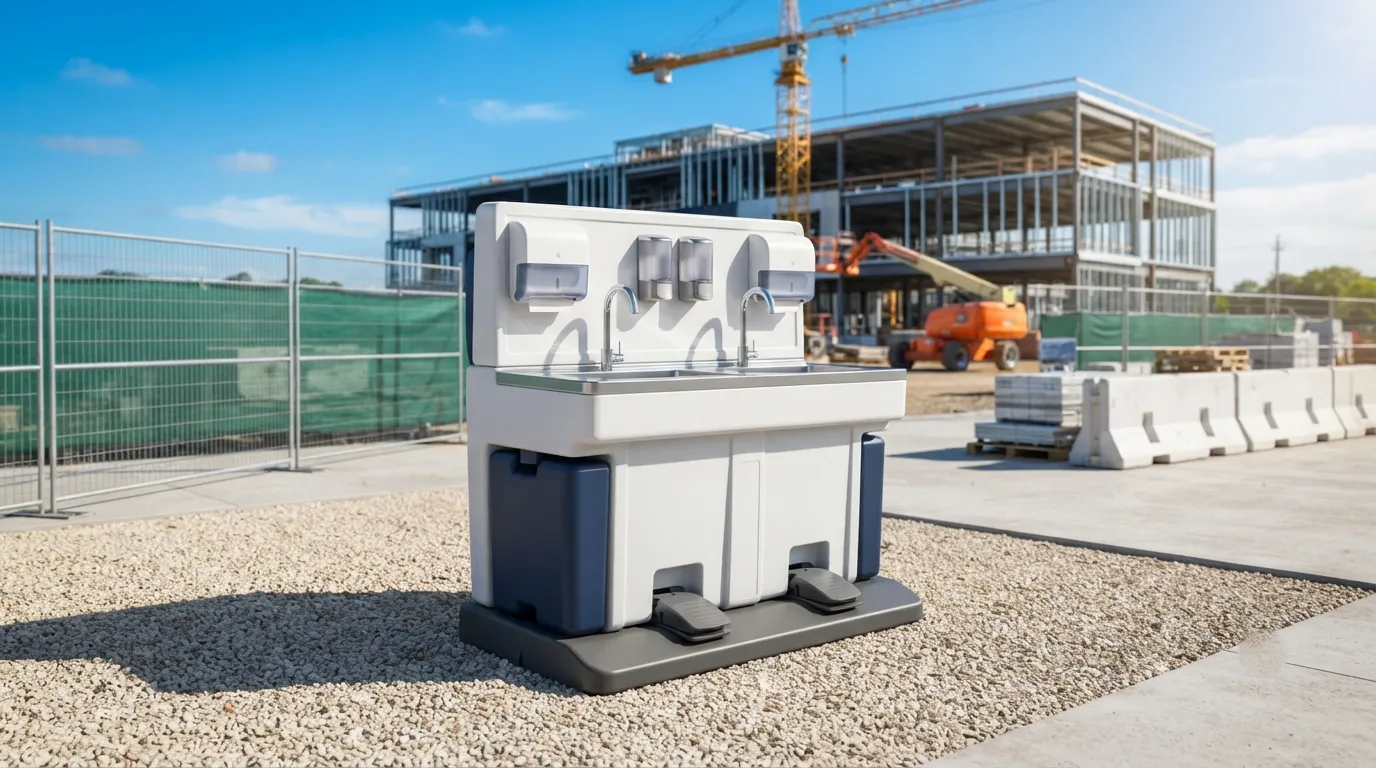
A disaster response setup usually mixes several products at once, not just toilets in a row. Standard units handle general use, ADA accessible porta potty units cover residents and responders with mobility needs, and portable sinks keep hands clean where soap and running water disappeared with the power. Under ADA Standards section 213.2, any cluster of single-user portable toilets needs at least one accessible unit, and never fewer than one, so a shelter with a dozen standard toilets on site still needs that accessible unit worked into the layout. Each accessible unit is built around a 60 inch turning circle per ADA Standards section 304.3.1 and a 32 inch minimum door opening per ADA Standards section 404.2.3, so a wheelchair or a walker actually fits. Handwashing stations follow 29 CFR 1910.141(d)2, which requires soap and towels or a hand-drying device, not just a sanitizer pump. If cleanup work involves paints, coatings or chemical treatments, washing facilities also need to meet OSHA 1926.51(f)(1) for that contaminant exposure specifically. For sites without working septic or sewer, we run holding tank rental equipment and pair it with septic pumping service visits scheduled around actual usage rather than a fixed weekly stop. Storm debris cleanup often runs alongside sanitation, and a roll-off dumpster rental or a construction dumpster rental unit staged next to the restrooms keeps a shelter or command site from turning into a second mess.
How many units does a shelter or response site need?
Unit count depends on headcount and hours, and OSHA 1926.51(c) sets the baseline most responders use even outside a construction context: 1 toilet for 20 workers or fewer, then 1 toilet and 1 urinal per 40 workers up to 200, dropping to 1 per 50 above that. A shelter or command post in Pontiac sheltering 60 displaced residents plus a rotating crew of 15 responders should plan for more than a single unit pair. Our how many porta potties do i need guide walks through the math for mixed shelter and worker populations, since a shelter's overnight population differs from its daytime crew. Pricing during emergency response tracks close to standard event and weekend rates rather than a special disaster tier, so budgeting is straightforward.
| unit | day | week | month |
|---|---|---|---|
| standard | $100 - $350 | $130 - $500 | $125 - $325 |
| ada | $200 - $400 | $240 - $400 | - |
Longer deployments, like a multi-week shelter response, generally shift to weekly or monthly rates rather than repeated daily bookings. See porta potty rental cost and monthly porta potty rental for how those rates scale once a response runs past the first week. Temporary fencing also gets requested often for shelter perimeters and storm debris zones; a temporary fence rental run keeps foot traffic away from staging equipment and downed lines.
Do you charge extra for emergency or after-hours delivery?
Emergency and weekend delivery runs at a premium over a standard weekday drop, generally landing in the $125 to $540 range depending on timing and distance. It is not hidden. We quote it up front on the call so a shelter coordinator or property manager in Pontiac knows the number before trucks move.
Can you service sites with no working power or water?
Yes. Standard units need neither, and handwashing stations carry their own water supply, satisfying OSHA 1926.51(a)(1) without tapping into a damaged system. Holding tanks handle wastewater independently too, which matters most after a septic or sewer failure tied to flooding.
What if the disaster site is outside Pontiac proper?
We still run it. Bloomfield sits 6.3 miles south, Birmingham 9.3 miles southeast, and Independence 11.9 miles northwest, all inside normal delivery range. Check service areas or call directly and we will confirm timing for the exact address.
How quickly can you add more units once a site is running?
Fast, usually same day if inventory allows. Disaster response headcounts shift hour to hour, and we would rather over-supply a Pontiac shelter site early than have someone waiting on a toilet at 2 a.m.
Do displaced residents get charged differently than responder crews?
No, the unit and rate structure stays the same regardless of who uses it. What changes is quantity and duration, both scoped during the initial call so the invoice matches what actually got deployed.
Next step
Get a delivery date
Tell us the address, the dates and the headcount. We size the order and confirm the route.